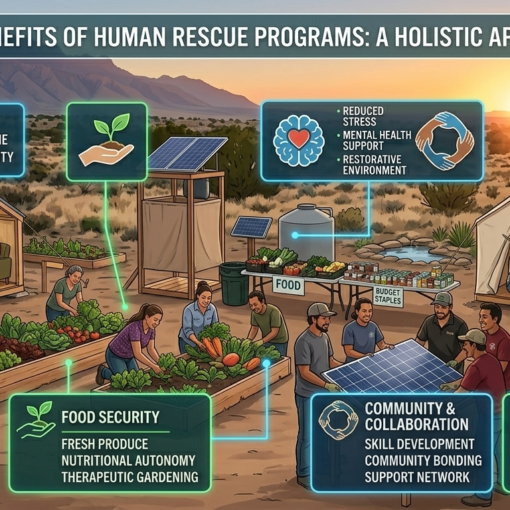
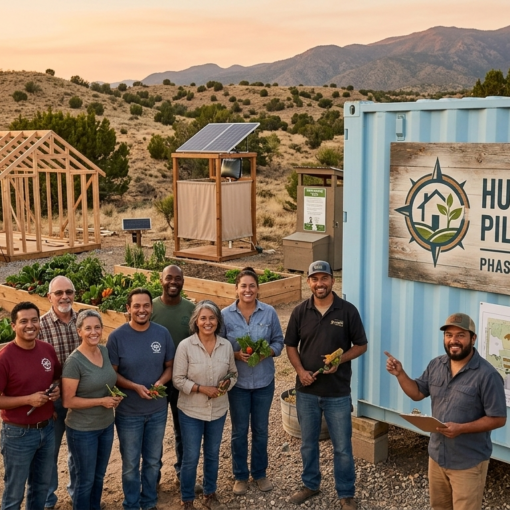
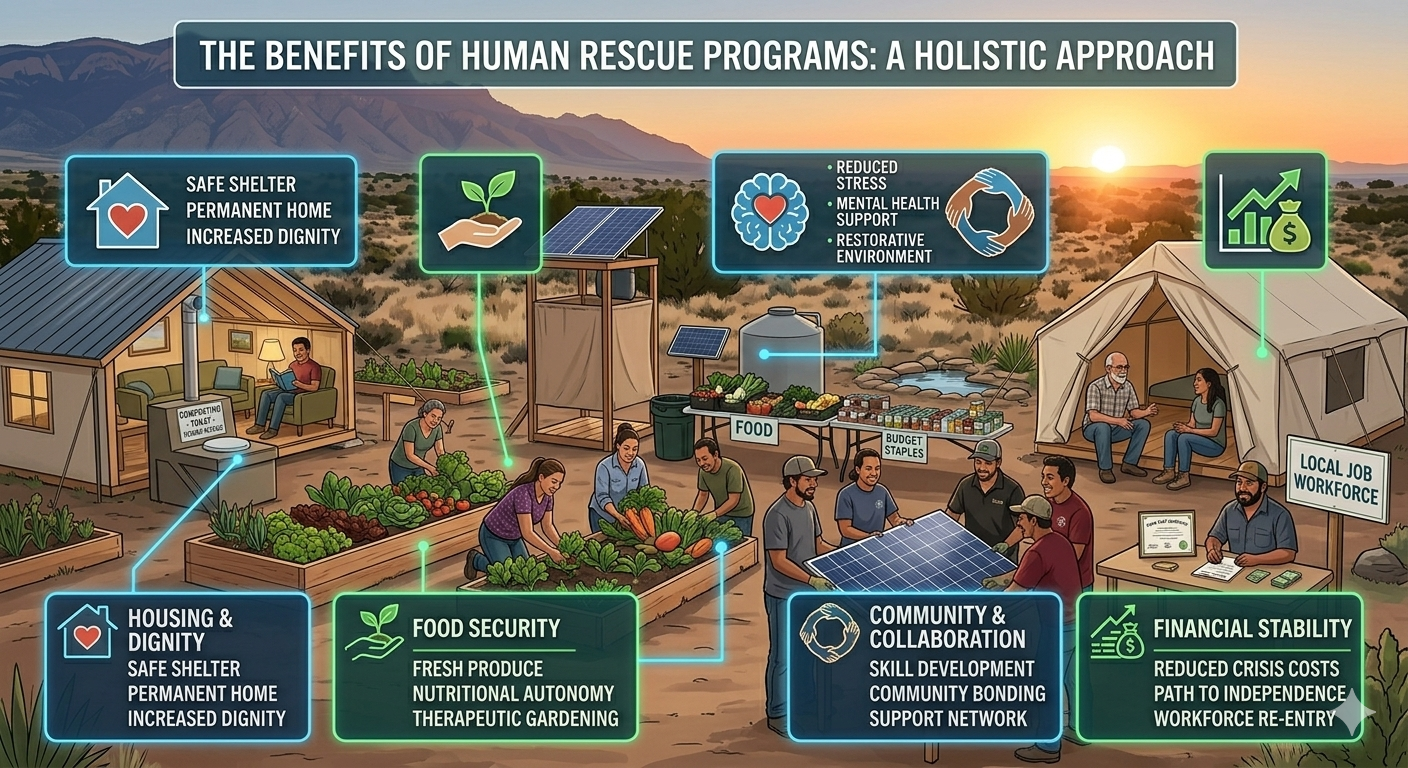
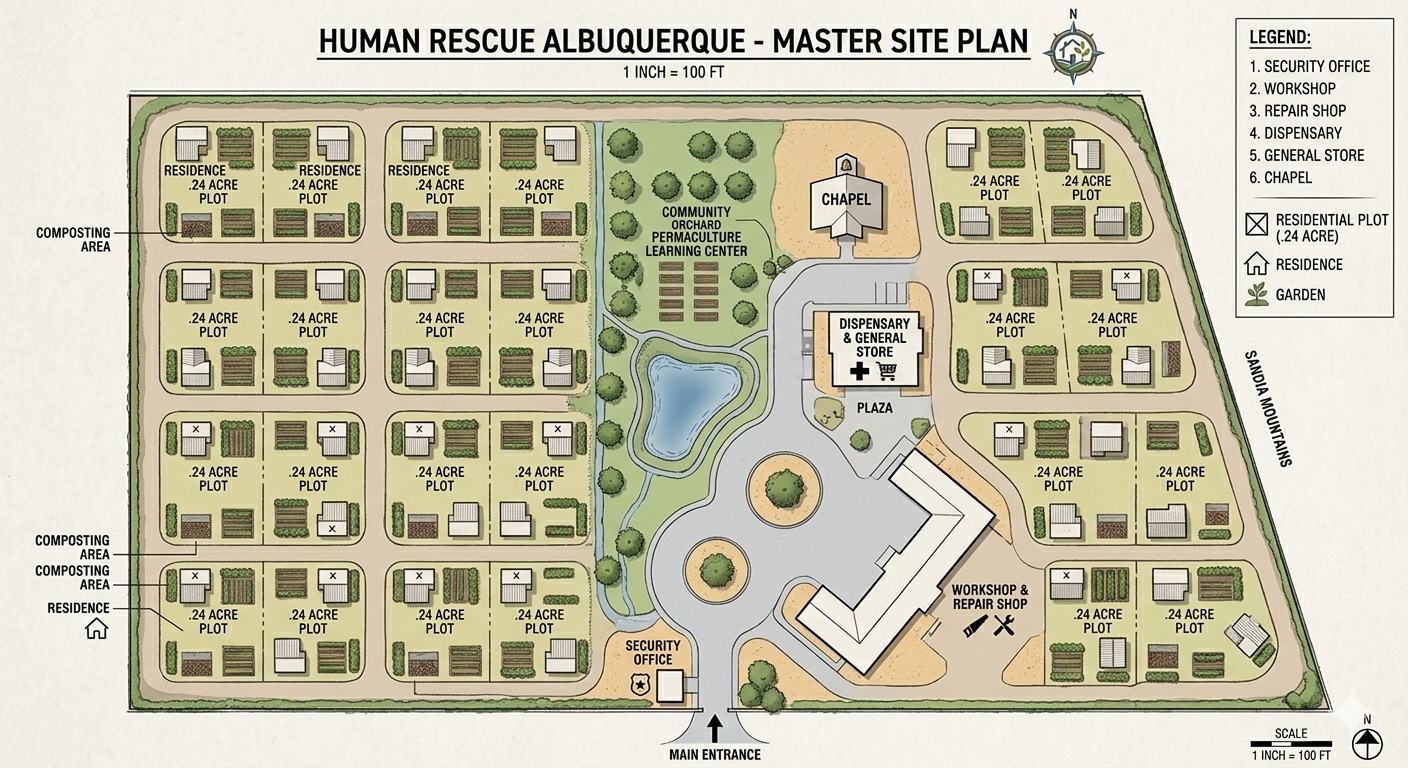
The site plan for the Human Rescue Albuquerque includes everything from a small chapel, to a dispensary, to a security office. It provides a sense of structure and normalcy, as well as giving the residents a sense of security. This site plan outlines a vision for a sustainable and supportive community that empowers residents to build a better future for themselves and their families. By prioritizing self-sufficiency, community engagement, and environmental stewardship, Human Rescue Albuquerque aims to create a model for sustainable living that can be replicated in other communities facing similar challenges.
Human Rescue Albuquerque Site Plan
Site Overview: The Human Rescue Albuquerque site will be a 10-acre rural development designed for a community of 40 residents (based on a density of 4 residents per acre). The site will prioritize sustainability, self-sufficiency, and community engagement.
Central Amenities:
-
Workshop & Repair Shop: Located in a central hub, this facility will provide residents with access to tools, equipment, and training for various skills. It will encourage self-reliance and the repair of personal items.
-
Dispensary & General Store: This combined facility will meet the community’s essential needs. The dispensary will provide medical supplies and basic healthcare, while the general store will offer food, household goods, and personal items.
-
Chapel: A dedicated space for spiritual reflection, meditation, and community gatherings. It will welcome residents of all faiths and beliefs.
-
Security Office: Located near the main entrance, this office will ensure the safety and security of the community. It will be staffed 24/7 and coordinate with local emergency services.
Residential Plots:
-
-
.24 Acre Plots: The site will contain 40 .24 acre plots, with each resident or family unit assigned one. These plots will be designed for sustainable living and self-sufficiency.
-
Plot Layout: Each plot will feature a small tiny home or sustainable dwelling, a vegetable garden, and space for composting. Residents will be encouraged to implement permaculture principles to maximize food production.
-
Sustainable Infrastructure:
-
Composting Toilets: All residential plots and central facilities will utilize composting toilets to minimize water usage and promote nutrient cycling.
-
Solar Power: The site will be powered primarily by solar energy, with solar panels installed on rooftops and a central solar farm. This will reduce reliance on the traditional power grid.
-
Water Management: Rainwater harvesting and greywater recycling systems will be implemented to conserve water and promote sustainable water use.
-
Food Production: Community gardens and orchards will supplement individual plot production, fostering community cooperation and providing healthy food for all residents.
Community Engagement:
-
Common Areas: The central hub will feature open spaces for community gatherings, events, and recreational activities.
-
Skill-Sharing Programs: Residents will be encouraged to share their skills and knowledge through workshops, classes, and mentorship programs.
-
Volunteer Opportunities: Residents will have opportunities to volunteer within the community and contribute to the maintenance and development of the site.
Zoning & Regulations:
-
Zoning Compliance: The site plan will be developed in compliance with local zoning regulations and building codes.
-
Environmental Impact: An environmental impact assessment will be conducted to ensure the development does not negatively impact the surrounding ecosystem.
-
Permitting Process: The necessary permits and approvals will be obtained from local authorities before construction begins.
Phased Development:
-
Phase 1: Initial site preparation, construction of central amenities, and development of 10 residential plots.
-
Phase 2: Development of 15 additional residential plots and expansion of community garden and orchard.
-
Phase 3: Completion of remaining 15 residential plots and final landscaping.
Timeline & Budget:
-
Timeline: The development of Human Rescue Albuquerque is expected to take 2-3 years, depending on funding and resource availability.
-
Budget: A detailed budget will be developed for each phase of the project, taking into account construction costs, materials, and labor.
Funding Strategy:
-
Grants & Donations: Funding will be sought from government grants, foundations, and individual donors who support sustainable communities and homeless relief efforts.
-
Crowdfunding: A crowdfunding campaign will be launched to raise funds and create awareness for the project.
-
Partnerships: Partnerships will be explored with local businesses, non-profit organizations, and academic institutions to leverage resources and expertise.
Monitoring & Evaluation:
-
Progress Tracking: Regular monitoring and evaluation will be conducted to track progress, identify challenges, and make necessary adjustments to the site plan.
-
Resident Feedback: Feedback will be sought from residents on an ongoing basis to ensure the community is meeting their needs and expectations.
-
Impact Assessment: An impact assessment will be conducted to measure the success of Human Rescue Albuquerque in promoting sustainable living and reducing homelessness.